Use AI where it changes the work.
We use AI in three practical ways: to build better systems faster, to handle selected tasks that need interpretation, and to teach your team how to use current tools well.
Build with AI. Add AI to the work. Teach people to use it.
Request an audit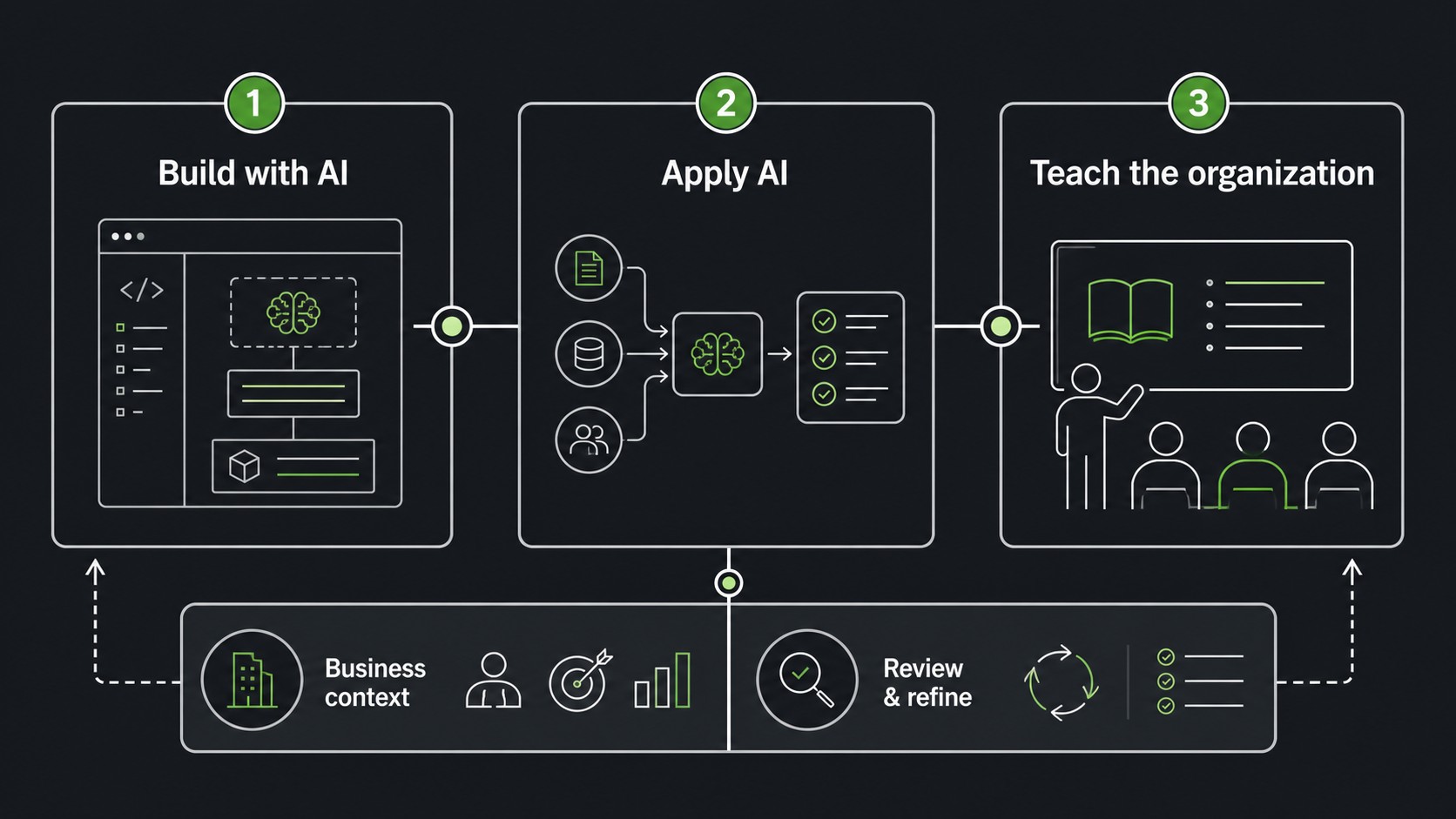
Use AI to spend less time on repetitive build work.
AI helps us understand existing systems, explore options, write and update code, create tests, and document the result. An experienced person still directs the work and checks what is delivered.
- Review existing software and information more quickly.
- Handle repetitive code changes and data-moving work.
- Create tests, comparisons, and first drafts of documentation.
- Try and compare possible solutions before choosing one.
- Understand the business problem and the people affected by it.
- Choose the approach and explain the important choices.
- Check privacy, security, accuracy, and unusual cases.
- Review the final result before it becomes part of the business.
More of the project can be spent understanding the work, checking the result, and improving what matters—not repeating tasks a machine can help with.
Use AI when the work needs interpretation—not just a rule.
Not every step needs AI. We look at what the work requires and choose the simplest method that can do it reliably.
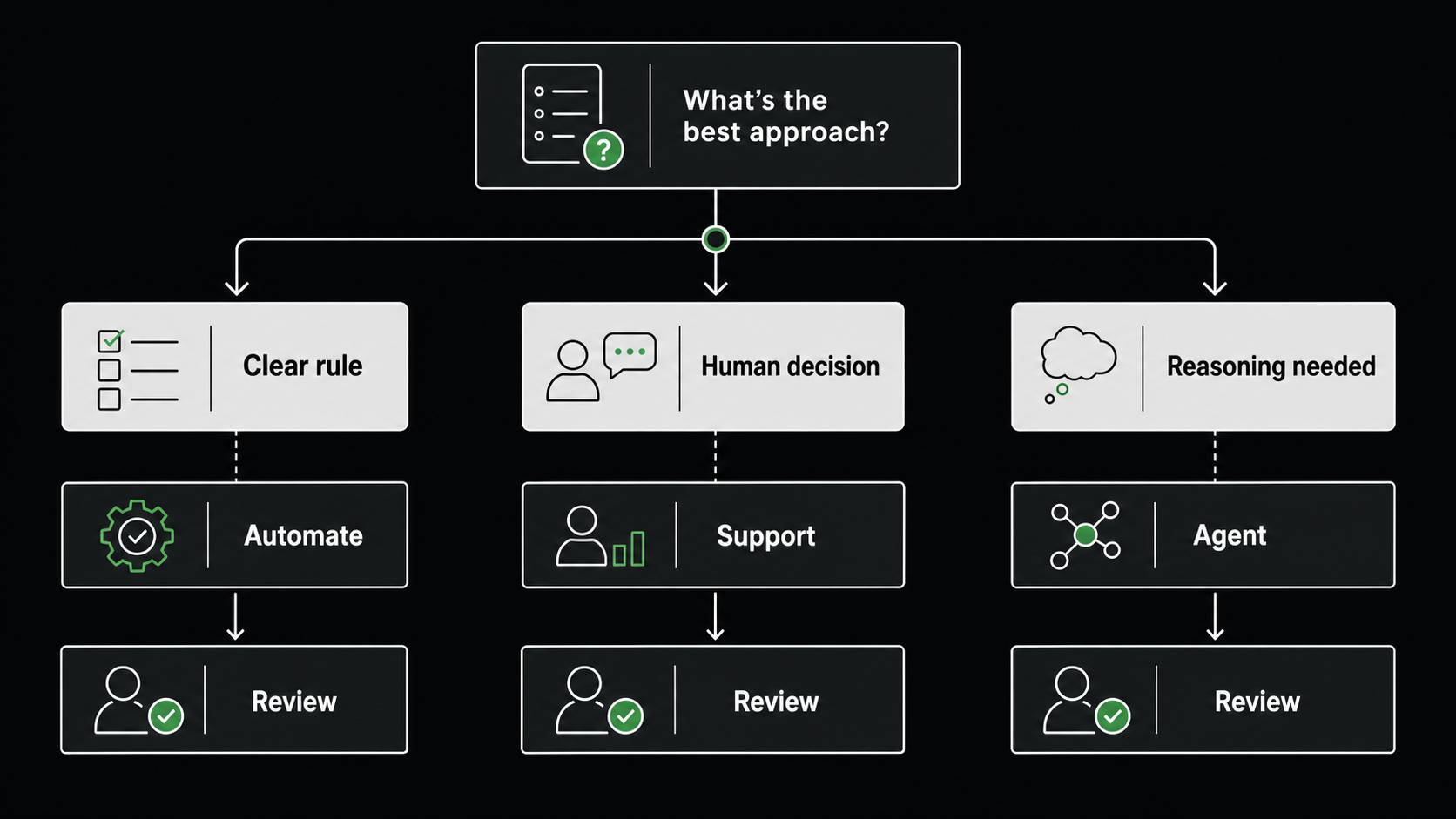
A clear rule
Use normal automationChecks, calculations, routing, reminders, and repeated handoffs should follow clear and predictable rules.
A person must decide
Use AI to prepare the decisionAI can collect the history, highlight missing information, and organize the context. The responsible person still decides.
Repeated interpretation
Consider an AI agentAn agent can read, compare, classify, or draft across several steps when the job and its limits are clear.
A result with consequences
Keep a review pointA person checks or approves the result before it affects a customer, payment, legal obligation, or important business decision.
An AI agent is software given a job that can read information, take several steps, and produce or carry out a result. It still needs reliable information, clear limits, a way to check its work, and someone responsible for it.
Make AI useful beyond a single project.
The tools keep changing. Leaders need to know where AI matters, teams need practice on real work, and the business needs simple rules for using it safely.
For leaders
Understand what AI can and cannot do, where it may be worth investing, and which risks need attention.
For teams
Practice using AI on everyday tasks, checking the output, and protecting private business information.
For the business
Agree on approved tools, clear responsibilities, and a practical way to keep learning as the technology changes.
Training is a separate service built around the work your leaders and teams already do.
Explore corporate AI training →AI should earn its place.
Before recommending AI, we ask a small set of practical questions about the problem, the information, the result, and the person responsible.
What business problem are we solving?
Could normal software or a clear rule solve it better?
Is the information complete and reliable enough to use?
Can the result be checked before it causes a problem?
Who owns the final decision and the ongoing system?
Find where AI can make a real difference.
Map one workflow, separate modernization from automation and AI, and leave with a practical plan for what should happen next.
- 01 Workflow and decision map
- 02 Data and integration readiness assessment
- 03 Risk, evaluation, and human-review requirements
- 04 Prioritized next step with scope boundaries