Turn a business problem into a working system.
Start with a short discovery call. The audit is the first formal engagement. It produces the workflow map and roadmap; implementation is optional and proceeds in bounded phases.
Discovery → Audit → Working document → Implementation
Request an audit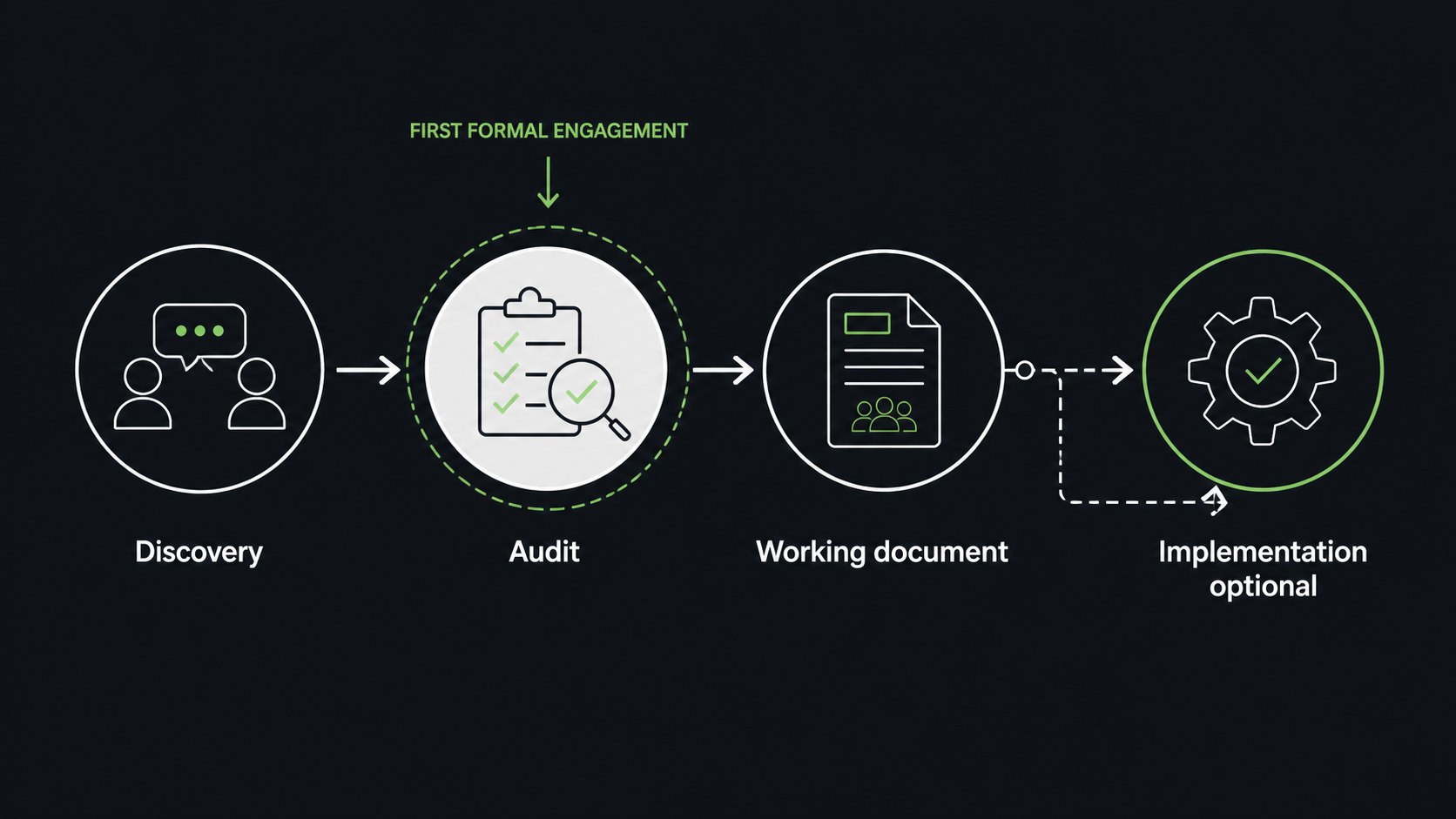
Start with the situation you can describe.
You do not need a solution brief. Bring the business pressure, the work it affects, and the outcome you want. We use the call to understand the context and decide whether an audit is the right next step.
- Describe where the business feels friction, delay, risk, or unnecessary cost.
- Identify the workflow, the people involved, and the systems they currently use.
- Define what a better operational outcome would look like.
See how the work actually happens.
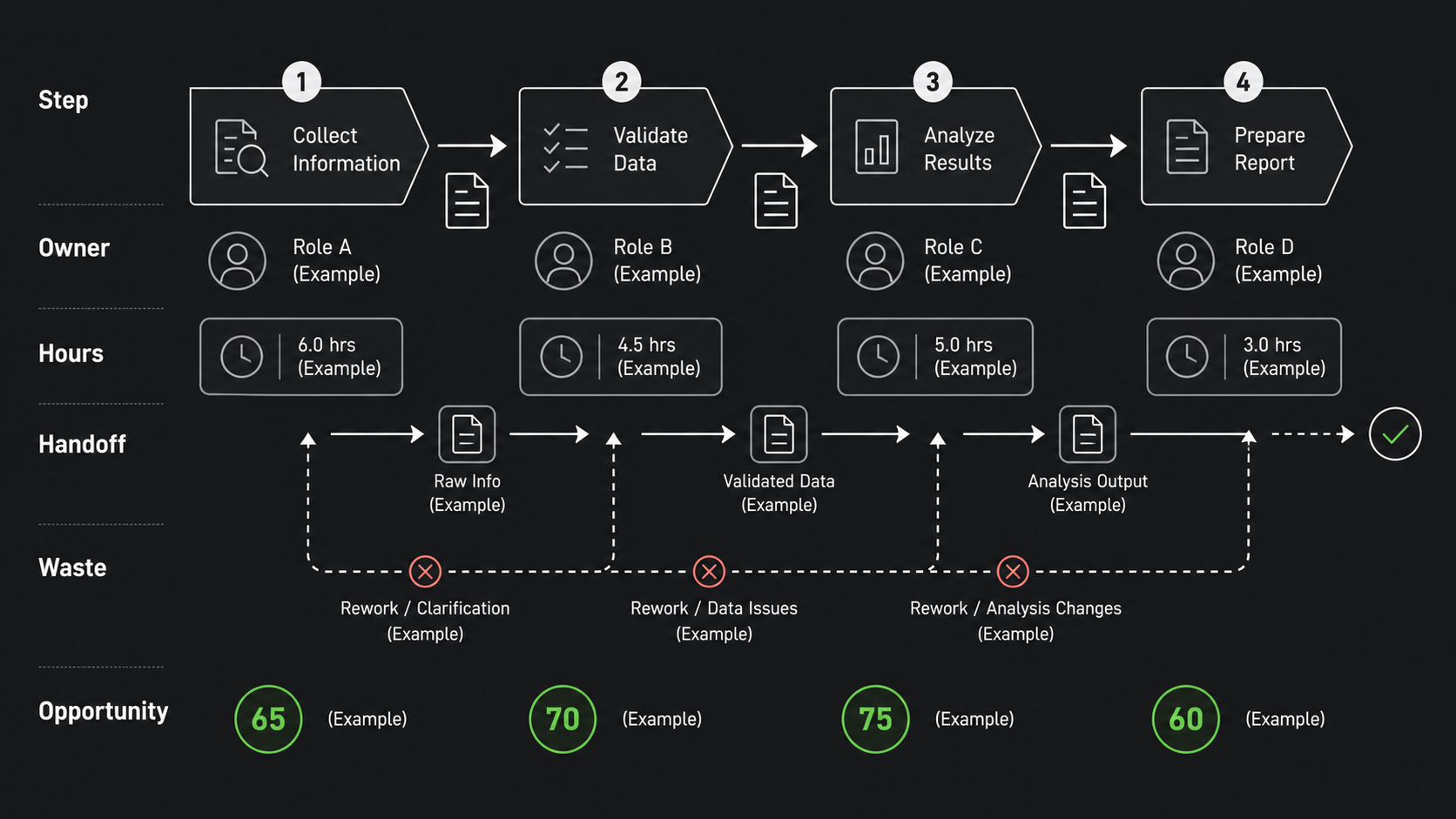
We work with the people who perform and own the process. Together we map the sources, steps, handoffs, exceptions, decisions, and time behind the workflow.
- Inventory the systems, files, messages, records, and informal knowledge the work depends on.
- Attach an owner and a time box to each process so effort, rework, and waste become visible.
- Separate fixed rules from human decisions and reasoning that may suit a bounded agent.
Turn the audit into a plan everyone can use.
We review the findings with operators and decision makers, resolve assumptions, and turn the workflow map into a shared working document.
- Confirm the current state, target state, business priorities, and boundaries.
- Set the phases, dependencies, responsibilities, and decisions needed for delivery.
- Define acceptance criteria so everyone understands what success means before the build starts.
Build the next useful version.
Implementation is optional and phase-based. We follow the shared document, keep ownership visible, and put review points around the parts that affect the business.
- Build, connect, or migrate the agreed systems and workflow.
- Test normal paths and important exceptions with the operators who own them.
- Document the system, train its owners, and compare the result with the original baseline.
Start with one workflow.
Map the work, quantify the opportunity, and leave with a phased plan your organization can act on.
- 01 Workflow and decision map
- 02 Data and integration readiness assessment
- 03 Risk, evaluation, and human-review requirements
- 04 Prioritized next step with scope boundaries